Itasca County Dog Registration Information
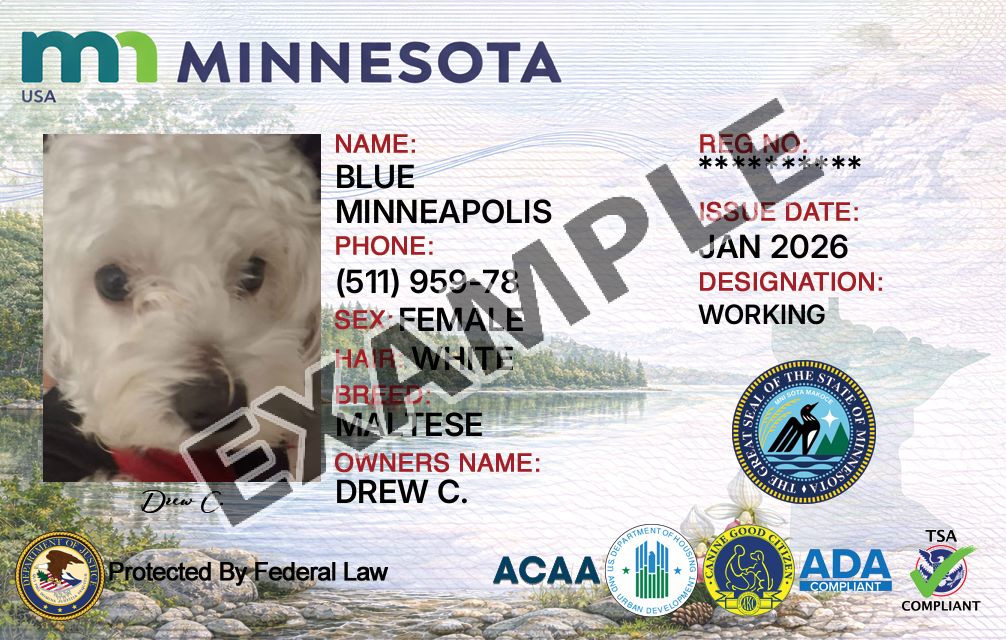
Service Dogs and Emotional Support Animals in Itasca, Minnesota
If you’re searching where do I register my dog in Itasca County, Minnesota for my service dog or emotional support dog, the key detail is this: dog licensing is usually handled locally (city, township, or the specific law-enforcement/animal control authority where you live), not through a single “service dog registry.”
This page explains how a dog license in Itasca County, Minnesota typically works, what to do about rabies vaccination documentation, and how dog licensing differs from service dog legal status and emotional support animal rules.
Where to Register or License Your Dog in Itasca County, Minnesota
Because licensing and animal-control enforcement can be handled at the city level (and sometimes differently between communities inside Itasca County), start by contacting the office that serves your home address. Below are several official local government offices in Itasca County that residents commonly contact for pet licensing, animal control questions, or related records.
City of Grand Rapids (City Offices)
Grand Rapids Police Department (Animal Control / Pet Database)
Itasca County Sheriff (County Government)
City of Coleraine — City Hall
City of Deer River — City Hall (Animal Control & Licensing Info)
City of Deer River — License Bureau
Overview of Dog Licensing in Itasca County, Minnesota
What “registering a dog” usually means
In everyday terms, “registering” your dog generally means getting a local dog license (and sometimes a tag) so animal control or law enforcement can identify your pet and verify rabies vaccination status. If you’re trying to figure out where to register a dog in Itasca County, Minnesota, the correct place is typically the city you live in (or the local authority that provides animal control services for your area).
Why dog licensing is often local (city-by-city)
Within Itasca County, different communities may manage animal control and licensing differently. For example, the City of Grand Rapids notes that it maintains a database of pets within the city and may have procedures that differ from nearby cities. Some cities have a dedicated “license bureau,” while others route licensing through a city clerk, police department, or city hall.
Rabies vaccination requirements (common baseline)
Even when licensing is local, rabies vaccination is a common requirement and a key part of enforcement. Many local licensing programs require you to provide proof your dog is current on rabies vaccination. Also, Minnesota’s animal health guidance emphasizes the importance of rabies vaccination for dogs (and notes rabies risk exists for domestic animals as well as wildlife).
How Dog Licensing Works Locally in Itasca County, Minnesota
Step 1: Identify the correct office for your address
Start with your city hall if you live within city limits (Grand Rapids, Deer River, Coleraine, etc.). If you live outside city limits, you may be in a township or unincorporated area where animal control and licensing questions are handled differently. In those cases, contacting county-level law enforcement (or your township office) is often the best first step to find the right licensing authority.
Step 2: Gather the documents they commonly request
While each city can set its own process, dog licensing commonly involves:
- Rabies vaccination proof (certificate or documentation from your veterinarian)
- Owner identification
- Proof of residency (especially if licensing fees differ for residents/non-residents)
- Payment of a licensing fee (fees vary by city)
Step 3: Apply, renew, and keep tags/records current
Some cities issue a tag; others maintain a database record that officers can query. For instance, the City of Grand Rapids states that it maintains a pet database and encourages owners to ensure their veterinarian provides contact and pet description information, and to have pets wear the rabies vaccination tag so the tag number can be used to look up records.
Animal control and rabies enforcement: what to expect
If your dog is found running at large or is involved in a bite incident, the local animal control or law enforcement authority may verify your dog’s rabies vaccination status and licensing record. Licensing is not only administrative; it’s often tied to public health and safety procedures that come into play quickly after an incident.
Example of local licensing details (varies by city)
The City of Deer River publishes a dog and cat license fee and lists contact numbers and office hours for City Hall and its License Bureau. Your city may publish similar details—or may require a phone call to confirm current fees and documentation requirements.
Service Dog Laws in Itasca County, Minnesota
A service dog is not “licensed” by a registry
A service dog is defined by what the dog is trained to do for a person with a disability—not by a certificate, vest, ID card, or online registration. You generally do not register a service dog with the county to make it legally a service animal. Instead, you follow any local requirements that apply to dogs (such as a local dog license and rabies vaccination rules), and you rely on service animal protections in the settings where access rights apply.
Dog license vs. service dog status (why both can matter)
Think of these as two separate tracks:
- Dog license in Itasca County, Minnesota (or in your city): a local compliance record tied to rabies vaccination and animal control.
- Service dog legal status: based on disability-related training and behavior standards (and applies in specific public access contexts).
It’s common to have a fully legitimate service dog that still needs to follow local licensing requirements if your city requires licensing for all dogs.
Common questions you can ask your local office
If your goal is “animal control dog license Itasca County, Minnesota,” ask your local office:
- Do service dogs still need a local dog license in your city?
- Do you require a rabies certificate, a rabies tag number, or both?
- Is there a fee waiver or different fee category for service animals (if any)?
- Do you issue a city tag, or do you maintain a database record?
Emotional Support Animal Rules in Itasca County, Minnesota
An emotional support animal (ESA) is different from a service dog
An emotional support animal provides comfort by its presence, but an ESA is generally not trained to perform specific tasks that mitigate a disability in the same way a service dog is. That difference matters because: ESAs do not receive the same broad public-access rights as service dogs.
ESA documentation vs. dog licensing
ESA-related documentation (when applicable in housing contexts) is separate from local licensing. Even if your dog is an ESA, you may still need to comply with your city’s requirements for a dog license in Itasca County, Minnesota and keep rabies vaccination records up to date.
Avoid third-party “registrations”
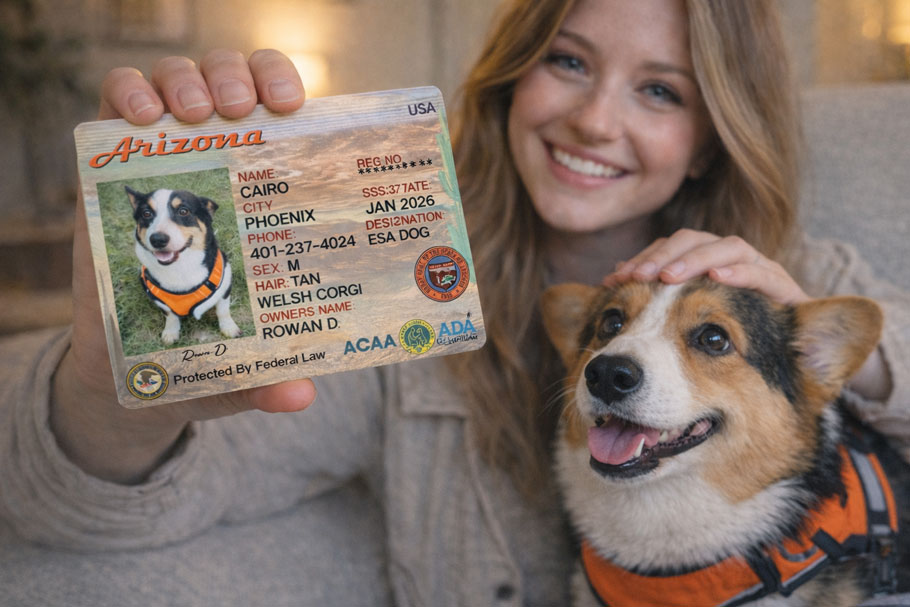
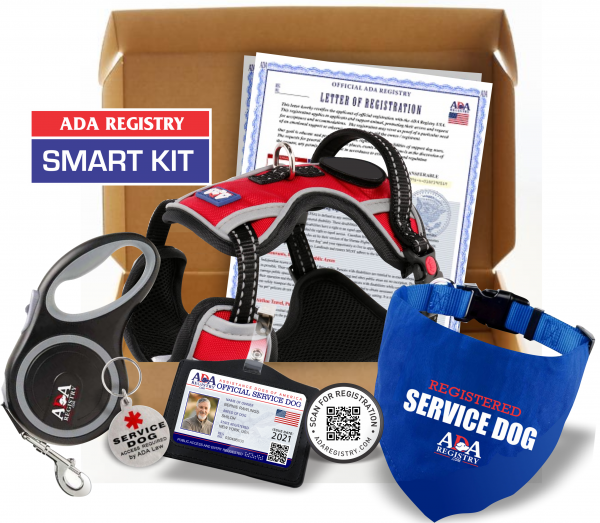
Many websites sell ESA/service dog “registrations,” cards, or certificates. Those vendors are not the same as local licensing authorities. For legal compliance and to avoid paying for something that your landlord, city, or law enforcement does not recognize, focus on your local city/township licensing process and your veterinarian’s vaccination documentation.
Frequently Asked Questions
Register A Dog In Other Minnesota Counties
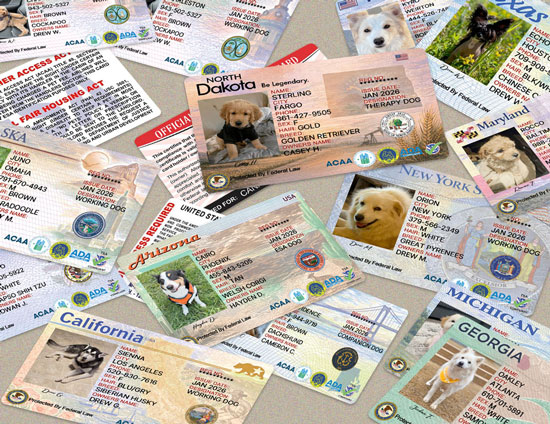
Select your county below to get started with your dog’s ID card. Requirements and license designs may vary by county, so choose your location to see the correct options and complete your pup’s registration.
- Aitkin County Dog Registration
- Anoka County Dog Registration
- Becker County Dog Registration
- Beltrami County Dog Registration
- Benton County Dog Registration
- Big Stone County Dog Registration
- Blue Earth County Dog Registration
- Brown County Dog Registration
- Carlton County Dog Registration
- Carver County Dog Registration
- Cass County Dog Registration
- Chippewa County Dog Registration
- Chisago County Dog Registration
- Clay County Dog Registration
- Clearwater County Dog Registration
- Cook County Dog Registration
- Cottonwood County Dog Registration
- Crow Wing County Dog Registration
- Dakota County Dog Registration
- Dodge County Dog Registration
- Douglas County Dog Registration
- Faribault County Dog Registration
- Fillmore County Dog Registration
- Freeborn County Dog Registration
- Goodhue County Dog Registration
- Grant County Dog Registration
- Hennepin County Dog Registration
- Houston County Dog Registration
- Hubbard County Dog Registration
- Isanti County Dog Registration
- Jackson County Dog Registration
- Kanabec County Dog Registration
- Kandiyohi County Dog Registration
- Kittson County Dog Registration
- Koochiching County Dog Registration
- Lac qui Parle County Dog Registration
- Lake County Dog Registration
- Lake of the Woods County Dog Registration
- LeSueur County Dog Registration
- Lincoln County Dog Registration
- Lyon County Dog Registration
- Mahnomen County Dog Registration
- Marshall County Dog Registration
- Martin County Dog Registration
- McLeod County Dog Registration
- Meeker County Dog Registration
- Mille Lacs County Dog Registration
- Morrison County Dog Registration
- Mower County Dog Registration
- Murray County Dog Registration
- Nicollet County Dog Registration
- Nobles County Dog Registration
- Norman County Dog Registration
- Olmsted County Dog Registration
- Otter Tail County Dog Registration
- Pennington County Dog Registration
- Pine County Dog Registration
- Pipestone County Dog Registration
- Polk County Dog Registration
- Pope County Dog Registration
- Ramsey County Dog Registration
- Red Lake County Dog Registration
- Redwood County Dog Registration
- Renville County Dog Registration
- Rice County Dog Registration
- Rock County Dog Registration
- Roseau County Dog Registration
- Scott County Dog Registration
- Sherburne County Dog Registration
- Sibley County Dog Registration
- St. Louis County Dog Registration
- Stearns County Dog Registration
- Steele County Dog Registration
- Stevens County Dog Registration
- Swift County Dog Registration
- Todd County Dog Registration
- Traverse County Dog Registration
- Wabasha County Dog Registration
- Wadena County Dog Registration
- Waseca County Dog Registration
- Washington County Dog Registration
- Watonwan County Dog Registration
- Wilkin County Dog Registration
- Winona County Dog Registration
- Wright County Dog Registration
- Yellow Medicine County Dog Registration